
Porcelain vs. Ceramic Tile: Which Is Right for Your Bathroom Floor?
How porcelain and ceramic tile differ in water absorption, strength, cost and looks, and which one we recommend for bathroom floors, showers and walls.
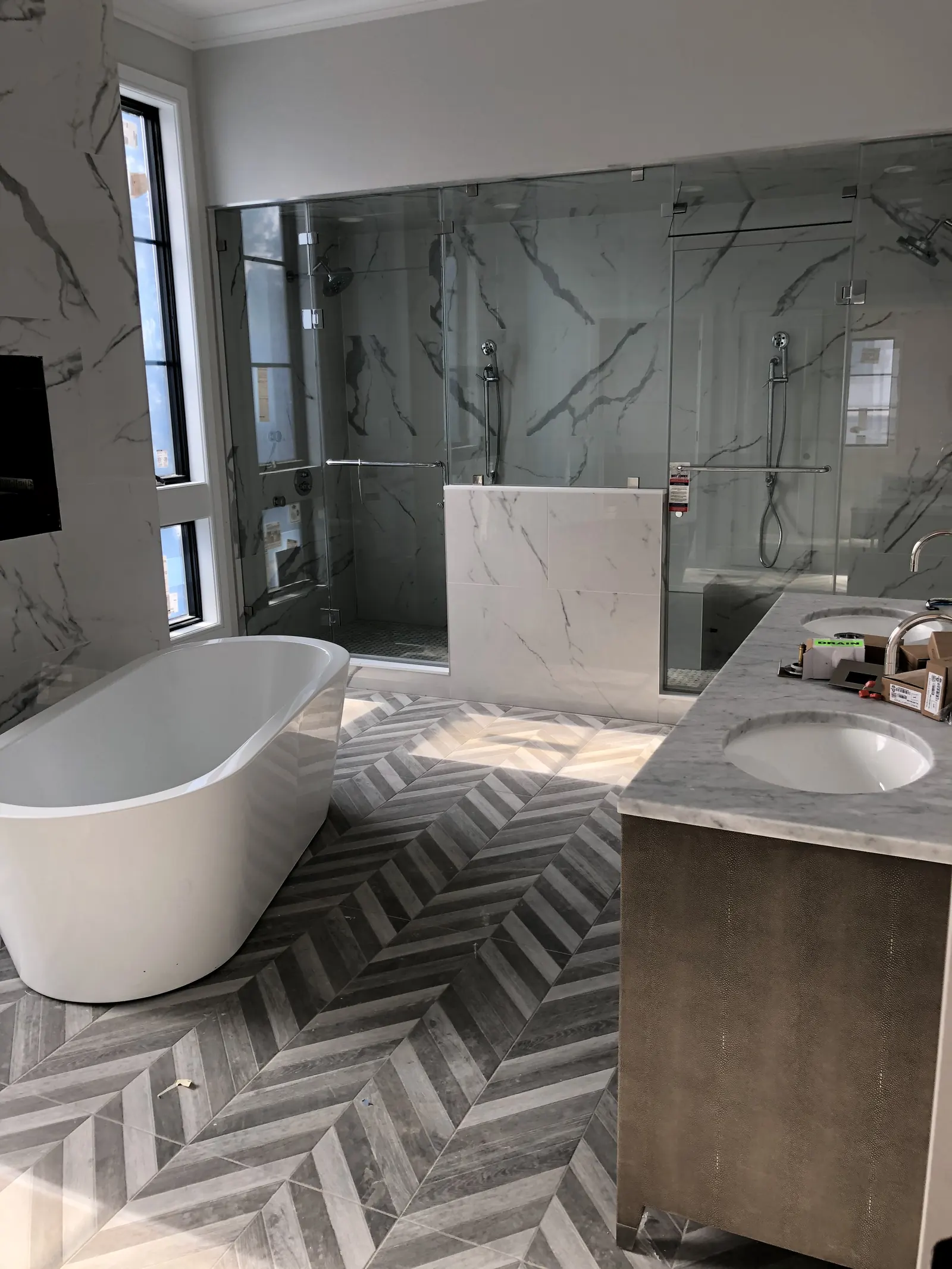
Porcelain and ceramic tile look alike on a display board, and both are made from fired clay. The difference is in how they’re made, and it matters most on a bathroom floor.
The short answer
For bathroom floors and shower floors, choose porcelain. For bathroom walls and backsplashes, ceramic is a good, often less expensive choice.
What makes them different
Porcelain is made from finer, denser clay and fired at a higher temperature. The result is a harder tile that absorbs very little water.
| Porcelain | Ceramic | |
|---|---|---|
| Water absorption | 0.5% or less | More than 0.5% |
| Hardness | Very dense, resists chips and wear | Softer, easier to cut |
| Best for | Floors, showers, high-traffic areas, outdoors (rated pavers) | Walls, backsplashes, light-traffic floors |
| Cost | Usually higher | Usually lower |
| Installation | Harder to cut, needs the right tools | Easier for installers |
The 0.5% water absorption line is the industry definition of porcelain under ANSI A137.1, so a tile sold as “porcelain” should meet it.
Why porcelain wins on bathroom floors
- Water. Low absorption means water stays on the surface, which is what you want around a tub or shower.
- Durability. Bathroom floors get dropped bottles, wet feet and years of cleaning. Porcelain handles it.
- Through-body color. Many porcelain tiles carry color through the tile, so a chip is harder to see.
- Looks. Today’s porcelain comes in convincing marble, stone, concrete and wood looks, in sizes from small mosaics to large-format slabs.
When ceramic makes sense
On walls, tile isn’t walked on, so ceramic’s lower hardness doesn’t matter. Ceramic is often lighter, easier to cut around niches and fixtures, and offers glossy glazes and handmade-look shapes that are popular for shower walls and backsplashes.
Two things to check on any floor tile
- Slip resistance. Look for the DCOF rating on the spec sheet. For wet, level interior floors, 0.42 or higher is the standard to look for.
- Size and the shower floor. Smaller tiles (or mosaics) on a shower floor give more grout lines, which means more grip and an easier slope to the drain.
See them side by side
The easiest way to decide is to hold both in your hand. At our Ridgefield showroom you can compare porcelain and ceramic in the same color, check the spec sheets, and take samples home to see them in your own light.